
Aerospace PCB · Military PCB
Aerospace PCB & Military PCB Manufacturing
IPC-6012 Class 3/3A fabrication on polyimide, high-Tg and RF laminates, with destructive physical analysis, coupon testing and full lot traceability for avionics, space-adjacent and defense electronics.
- IPC-6012
- Class 3/3A
- Typical range
- -55…+125 °C
- High-temp substrates
- Polyimide
- Ask before sending data
- ITAR

Overview
High-reliability PCBs for flight and defense.
Aerospace and military PCBs are built to survive extreme temperature, vibration, shock, altitude and sometimes radiation over service lives measured in decades. They use qualified materials such as polyimide and high-Tg or RF laminates, are fabricated to IPC-6012 Class 3/3A or MIL-PRF-31032, and are verified by destructive physical analysis with full traceability.
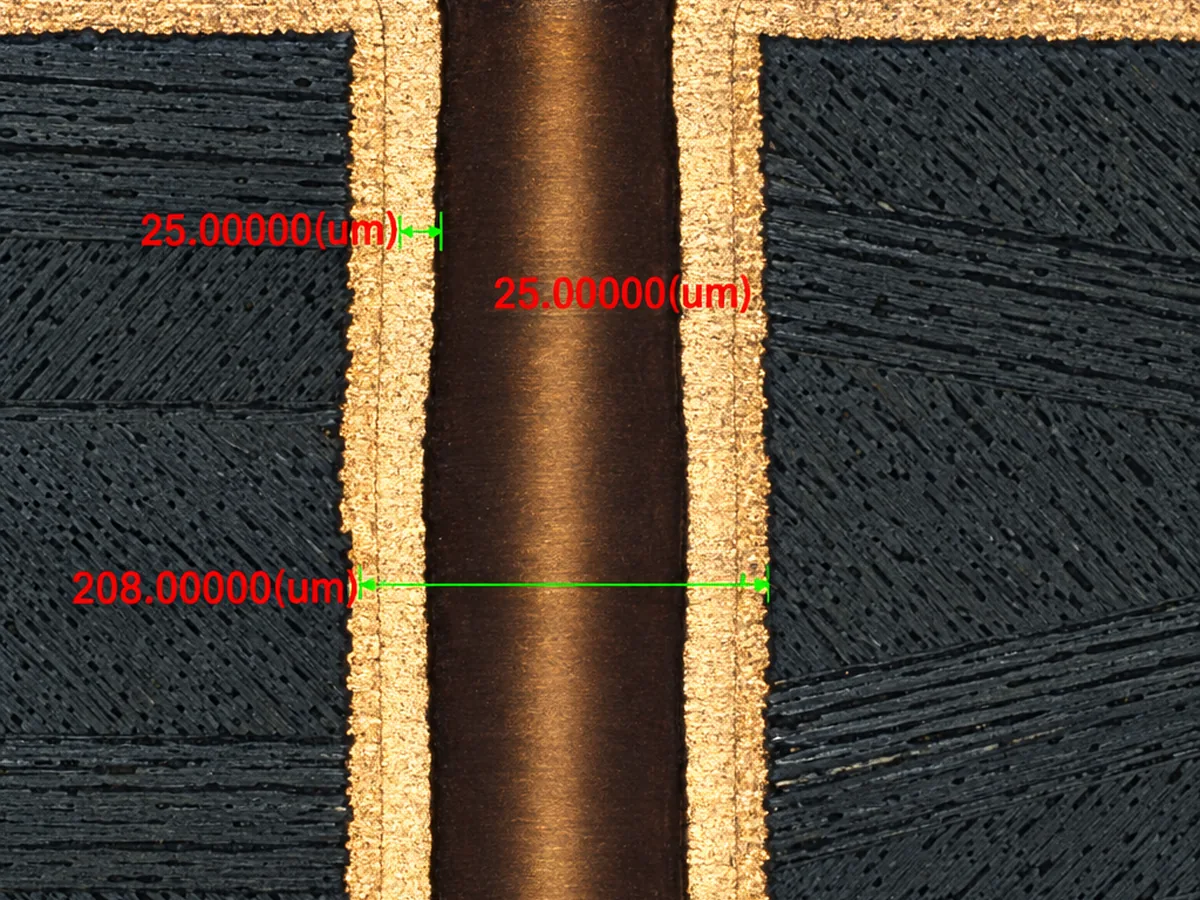
Reliability for these boards is proven, not assumed. Test coupons travel with every production panel and are cross-sectioned, thermally stressed and measured. Each lot carries documentation that lets a failure analyst trace a board back to its laminate lot and plating bath years later.
Environmental requirements
Environmental requirements.
Aerospace PCBs typically operate from -55 °C to +125 °C, or wider for space, and their thermal-cycling endurance is tested to thousands of cycles. Vibration from launch vehicles, turbine engines and military vehicles stresses solder joints, via barrels and laminate adhesion. Reduced pressure at altitude can cause laminate outgassing and voids in conformal coatings. For space, radiation tolerance of materials and the avoidance of tin-whisker risk (no pure-tin finishes) are added constraints.
| Stress | Board-level response |
|---|---|
| Thermal cycling | Low z-CTE laminate, verified barrel plating, Class 3 annular ring |
| Vibration & shock | Robust pads, teardrops, underfill/staking, rigid-flex instead of cables |
| Low pressure / vacuum | Low-outgassing materials (e.g. NASA ASTM E595 screening) |
| Tin whiskers | ENIG, ENEPIG or immersion silver instead of pure tin |
Material selection
Aerospace PCB material selection.
Polyimide laminates are the standard where extreme thermal endurance is needed: Tg above 250 °C, Td above 400 °C and excellent resistance to thermal-cycling fatigue. Rogers and PTFE laminates give the low loss that radar, electronic-warfare and satcom front ends need. High-Tg FR-4 such as Isola 370HR is acceptable for less demanding aerospace applications within its capability. Specialty resins such as cyanate ester or BT are used in some high-temperature structural applications.
Surface finishes avoid pure tin and typically use ENIG, ENEPIG or immersion silver. ENEPIG or electrolytic gold over nickel is used for wire-bondable surfaces. Solder mask must be qualified for the temperature range, because standard mask can crack or delaminate under extreme cycling.
Military PCB specifications
Military PCB specifications.
Military PCBs are fabricated to MIL-PRF-31032 (performance specification for printed wiring boards) or IPC-6012DS (defense and space addendum). These go beyond standard Class 3 with destructive physical analysis (cross-sectioning) on every production lot, thermal-stress testing such as solder float, quantified microsection measurements of plating, etch and registration, and coupon-based testing that travels with the production panels.
| Specification | Scope |
|---|---|
| IPC-6012 Class 3 | High-reliability rigid boards |
| IPC-6012 Class 3/A, IPC-6012DS | Defense and space addendum requirements |
| MIL-PRF-31032 | Military performance specification (qualified-manufacturer program) |
| IPC-6013 Class 3 | Flex and rigid-flex |
| AS9100 | Aerospace quality management system |
Quality & traceability
Quality and traceability.
Every aerospace lot is traceable to the specific laminate, copper foil, solder mask and surface-finish chemistry lots used. Process records capture lamination parameters, drilling parameters, plating bath composition and analysis, and inspection data for each panel. This level of documentation supports AS9100-based supplier quality systems and makes root-cause analysis possible if a field failure occurs years after delivery.
- Lot-level material traceability
- Coupon microsection and thermal-stress results
- First-article inspection report
- Certificate of conformance per lot
- See certifications
Aerospace board types
Common aerospace PCB types.
Radar & EW
Multilayer RF boards on Rogers/PTFE with controlled impedance and high channel isolation.
High frequency PCBAvionics & flight computers
High-reliability multilayer on polyimide, Class 3A inspection and conformal coating.
Multilayer PCBExport control
ITAR and export-controlled data.
Contact us before sending any ITAR- or EAR-controlled technical data. AstroPCB manufactures in a partner network in China. Many ITAR programs require a domestic, registered manufacturer, and we will tell you plainly if yours does. For non-controlled aerospace and defense-adjacent commercial work, we execute NDAs and restrict data access before receiving files. US customers can read PCB manufacturer for USA customers.
Assembly
Assembly considerations for aerospace hardware.
Aerospace assembly is usually specified to IPC-A-610 Class 3 or J-STD-001 with space addenda, plus conformal coating to protect against condensation and contamination at altitude. Heavy components are staked or underfilled to survive vibration, and BGA and QFN joints are X-rayed. Where tin-lead solder is required under a documented exemption, it is used with matching finishes. See PCB assembly.
RFQ
What to send for an aerospace PCB quote.
- Applicable specification (IPC-6012 Class 3/3A, IPC-6012DS, MIL-PRF-31032)
- Export-control status of the data
- Material, finish and solder mask requirements
- Coupon, DPA and test requirements
- Documentation package and retention period
- Quantity and program schedule
FAQ
Frequently asked questions.
What IPC class do aerospace PCBs require?
Typically IPC-6012 Class 3 or Class 3/A, which add tighter tolerances, more inspection and requirements such as cross-section analysis and thermal-stress testing.
Do you build to MIL-PRF-31032?
We build to its technical requirements on request; programs that require a qualified-manufacturer listing should be confirmed during quoting.
Can you handle ITAR projects?
Contact us before sending data. Many ITAR programs require a domestic registered manufacturer, and we will say so if yours does.
What materials are used for military PCBs?
Polyimide, high-Tg FR-4, Rogers and PTFE, and specialty resins such as cyanate ester or BT, selected for environment and qualification.
Why avoid pure-tin finishes?
Pure tin can grow conductive whiskers that short circuits over time, a known risk in aerospace and space hardware.
What documentation comes with an aerospace lot?
Certificates of conformance, material lot traceability, microsection and thermal-stress results and first-article inspection reports.
Ready when your files are
Send your design and compliance requirements.
Upload Gerber, ODB++ or IPC-2581 data. Every quote includes a written engineering DFM review, typically within one business day.