Certifications & compliance
PCB Certifications: RoHS PCB, UL, ISO 9001 & IPC Class 3
The quality systems and compliance standards behind every AstroPCB board: RoHS PCB by default, UL-recognized constructions, ISO 9001, and IPC-6012 Class 2/3.
RoHS PCB
RoHS PCB compliance by default.
A RoHS PCB contains restricted substances below EU limits (2011/65/EU as amended by 2015/863/EU): lead, mercury, cadmium, hexavalent chromium, PBB, PBDE and four phthalates. Every AstroPCB board is built RoHS compliant by default, with lead-free finishes (lead-free HASL, ENIG, ENEPIG, immersion silver/tin, OSP).
For applications with valid exemptions, such as certain military, aerospace and medical uses, tin-lead finishes and assembly are available with documentation of the exemption. REACH declarations are available on request.
UL
UL recognition.
UL 796 recognition covers laminate, construction type and process for boards used in UL, cUL or ETL listed products. The UL mark, laminate designation and maximum operating temperature are marked on compliant boards.
ISO 9001
ISO 9001 quality management.
The ISO 9001 quality system covers design review, process control, inspection, test, traceability and corrective action for every order, prototype or production.
IPC
IPC standards we build to.
| Standard | Scope |
|---|---|
| IPC-6012 Class 2 | Default for rigid boards |
| IPC-6012 Class 3 / 3A | High reliability: medical, automotive, aerospace |
| IPC-6013 | Flex and rigid-flex |
| IPC-A-600 | Visual acceptability of bare boards |
| IPC-A-610 | Assembly workmanship |
REACH
REACH compliance.
REACH (EU Regulation 1907/2006) requires disclosure of Substances of Very High Concern (SVHC) present above 0.1% by weight. We monitor the SVHC candidate list and supply REACH declarations on request, stating whether any SVHC is present in the delivered product above the reporting threshold.
Documentation
Compliance documents available on request.
| Document | Typical use |
|---|---|
| RoHS certificate / declaration | EU and global market access |
| REACH SVHC declaration | EU supply-chain disclosure |
| UL file / marking | UL, cUL or ETL listed end products |
| ISO 9001 certificate | Supplier approval |
| IPC-6012 / IPC-A-600 inspection report | Acceptance evidence |
| Material CoC and lot traceability | Medical, automotive, aerospace files |
| Microsection and TDR reports | Process and impedance evidence |
| Halogen-free declaration | Environmental programs |
Responsible sourcing
Conflict minerals and responsible sourcing.
For customers with conflict-minerals or responsible-sourcing obligations, we can provide supplier declarations covering tin, tantalum, tungsten and gold (3TG) in our materials on request, using common industry templates such as CMRT where available. Ask during quoting so the declaration matches your reporting format.
IPC classes
IPC classes explained.
IPC-6012 defines three performance classes for rigid boards. Class 1 is general electronics where function matters more than appearance. Class 2 is dedicated-service electronics such as industrial, telecom and computing products, where long life is wanted but not critical, and it is our default. Class 3 is high-reliability electronics such as medical, automotive safety and aerospace, where downtime is unacceptable. Class 3 tightens plating thickness, annular ring, hole-wall and laminate criteria and needs more inspection evidence.
IPC-A-600 gives the visual acceptability criteria for bare boards in each class, and IPC-A-610 does the same for assemblies. Specify the class on the fabrication and assembly drawings; if nothing is specified, Class 2 applies.
| Class | Typical products | Inspection |
|---|---|---|
| Class 1 | Toys, simple consumer | Basic |
| Class 2 | Industrial, telecom, computing | Standard (default) |
| Class 3 | Medical, automotive safety, aerospace | Tight criteria, microsection evidence |
UL detail
What UL recognition covers.
UL 796 covers the board construction: laminate, copper weight, minimum trace width, maximum operating temperature and flammability, tested as a combination. A board is only UL-recognized when it is built within the recognized limits. Tell us during quoting if your end product needs UL, cUL or ETL listing and whether you need the UL mark and date code on the board.
Quality system
How the quality system works day to day.
- Incoming inspection of laminates, foil, chemistry and solder mask
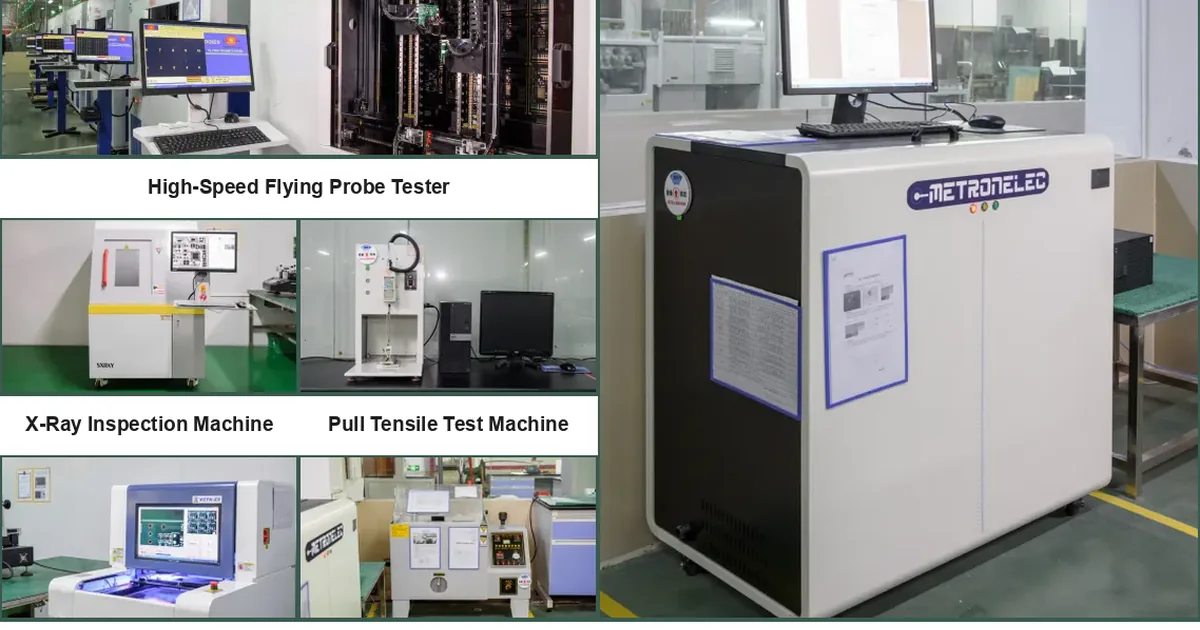
- In-process AOI, X-ray registration and plating checks
- Final electrical test, visual and dimensional inspection
- Corrective-action process with root-cause analysis
- Calibrated measurement equipment and documented procedures
- Change notification for material or process changes
Industry
Industry-specific compliance.
FAQ
Compliance questions.
Are your PCBs RoHS compliant?
Yes, by default. Tin-lead is available only for documented exemptions.
Can I get certificates for my supplier file?
Yes — request ISO, UL, RoHS/REACH and other certificates via contact.
Do you build to IPC Class 3?
Yes, on request, with Class 3 inspection and documentation.
Are your PCBs REACH compliant?
REACH SVHC declarations are available on request, stating whether any SVHC is present above 0.1% by weight.
Do you support UL-listed products?
Yes; boards use UL 94 V-0 materials and recognized constructions, and UL marking can be applied when required.
Can you provide a CMRT?
Conflict-minerals declarations can be provided on request in common industry formats.
Ready when your files are
Need certificates for your supplier file?
Upload Gerber, ODB++ or IPC-2581 data. Every quote includes a written engineering DFM review, typically within one business day.