
Shengyi (SYTECH) high-Tg FR-4
Shengyi S1000-2M PCB: High-Tg, Lead-Free FR-4
Shengyi S1000-2M is a high-Tg, anti-CAF, lead-free FR-4 laminate and our default material for multilayer, HDI and automotive boards that need more thermal margin than standard FR-4.
- Tg
- 185 °C
- Td
- 355 °C
- Dk @ 1 GHz
- 4.6
- Lead-free
- Anti-CAF
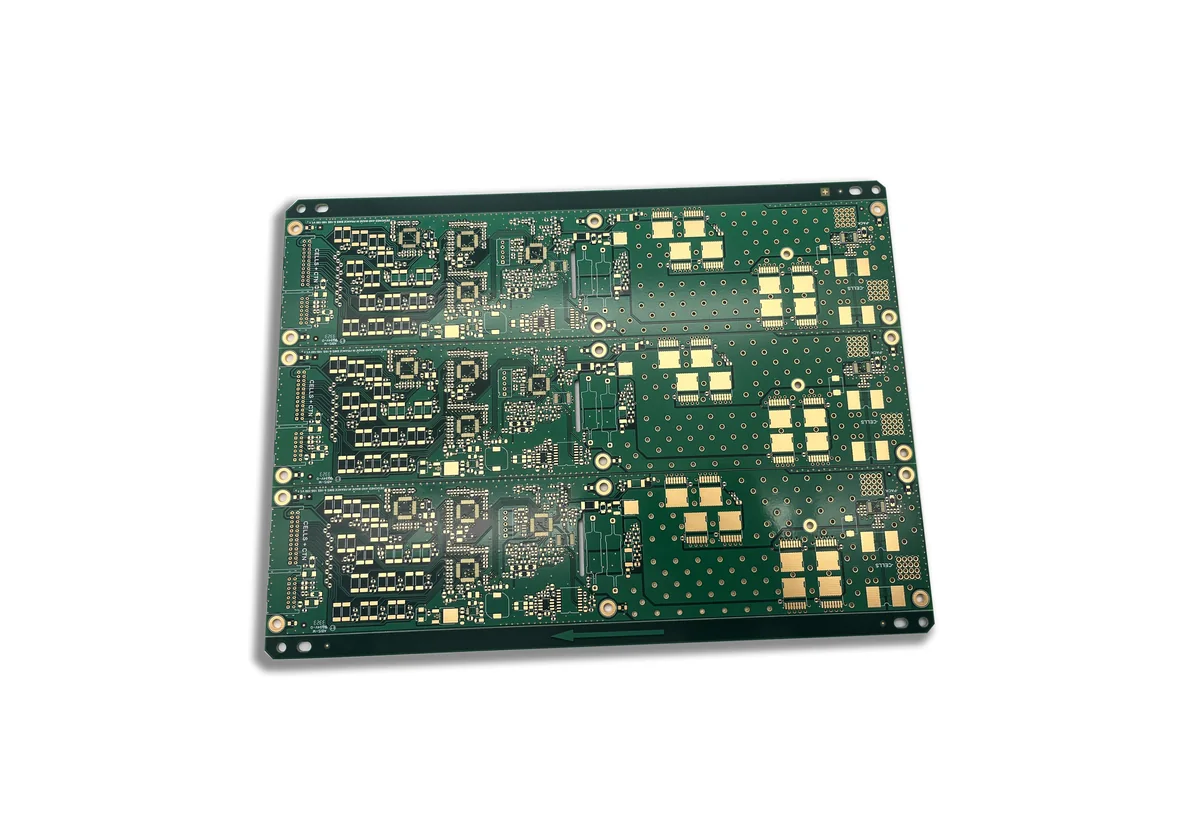
What is S1000-2M
What is Shengyi S1000-2M?
Shengyi S1000-2M is a high-Tg FR-4 laminate (prepreg S1000-2MB) from Shengyi Technology (SYTECH), one of the world’s largest copper-clad laminate makers. It is lead-free compatible and anti-CAF, with a Tg of about 185 °C and a decomposition temperature of about 355 °C, which gives multilayer boards the thermal margin they need for repeated 260 °C reflow.
S1000-2M is the high-Tg FR-4 we use most. It is common in automotive, industrial, energy and metering electronics, and it is a frequent equivalent for drawings that call for a high-Tg, CAF-resistant FR-4 such as Isola 370HR.
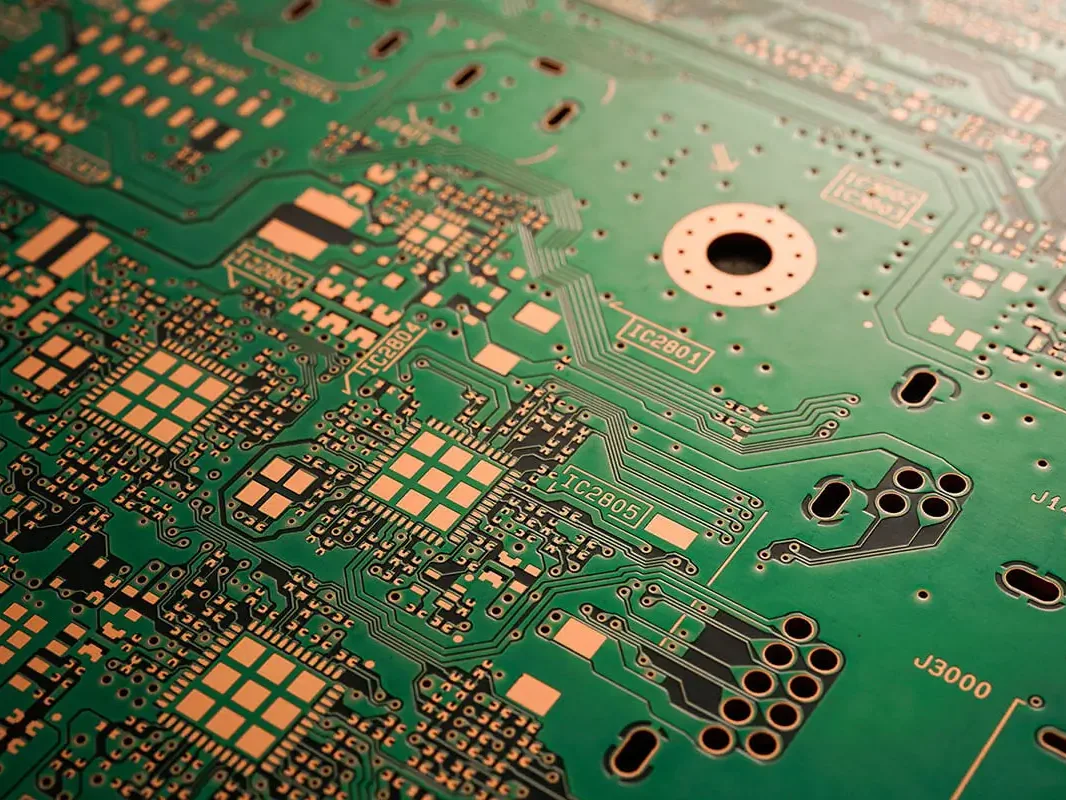
Properties
S1000-2M typical properties.
| Property | Typical value | Why it matters |
|---|---|---|
| Tg | ≈ 185 °C | Less z-axis expansion during lead-free reflow |
| Td | ≈ 355 °C | Margin for rework and multiple reflows |
| Dk @ 1 GHz | ≈ 4.6 | Impedance model input; use the value for your glass style |
| Df @ 1 GHz | ≈ 0.018 | Standard-loss FR-4; not for 10 Gbps+ long channels |
| CTE (Z), α1 / α2 | ≈ 41 / 208 ppm/°C | Barrel stress below and above Tg |
| CAF resistance | Yes | Long-life, high-voltage and tight hole pitch designs |
| Lead-free compatible | Yes | 260 °C reflow |
| Flammability | UL 94 V-0 |
When to use
When to specify S1000-2M (high Tg FR4).
Specify a high-Tg FR-4 such as S1000-2M when a board will see lead-free assembly with more than one reflow, has more than about eight layers or a thick finished board, uses sequential lamination for HDI, or must survive thermal cycling in automotive or industrial service. Standard FR-4 (Tg about 140 °C) expands much more above its Tg, which strains plated holes on every reflow.
For high-speed channels at 10 Gbps and above, or for RF, move to a low-loss or RF laminate: Megtron, Shengyi Synamic grades or Rogers 4350B.
Comparison
S1000-2M vs other FR-4 grades.
| Laminate | Class | Tg (approx.) | Positioning |
|---|---|---|---|
| Shengyi S1141 | Standard FR-4 | ≈ 140 °C | Low cost, simple lead-free |
| Shengyi S1000-2M | High-Tg FR-4 | ≈ 185 °C | Default high-Tg, anti-CAF |
| ITEQ IT-180A | High-Tg FR-4 | ≈ 175 °C | Common high-Tg alternative |
| Isola 370HR | High-Tg FR-4 | 180 °C | Widely specified in US drawings |
| Isola FR408HR / Megtron 4 | Low-loss | ≈ 175–190 °C | Faster digital |
Stack-up
Stack-up guidance on S1000-2M.
S1000-2M is available in the standard range of core thicknesses and prepreg glass styles (106, 1080, 2116, 7628 and others), so most multilayer stack-ups from 4 to 30 layers can be built without special ordering. Dk depends on resin content: thin, resin-rich prepregs such as 106 have a lower Dk than 7628. We model impedance with the Dk of the actual glass style rather than one number for the whole board.
- Use glass-style-specific Dk for impedance
- Balance copper and prepreg on mirrored layers to control warpage
- Specify finished thickness and tolerance
- Use spread-glass styles on fine-pitch, high-speed differential pairs
Equivalents
S1000-2M as an equivalent for other high-Tg laminates.
Many drawings call out a laminate “or equivalent” by IPC-4101 slash sheet rather than by brand. S1000-2M is commonly offered against high-Tg, CAF-resistant FR-4 callouts, including Isola 370HR and ITEQ IT-180A. An equivalent is never substituted silently: we list the proposed material and its data sheet with the quote, and use it only with your written approval.
| Drawing callout | Possible equivalent | Note |
|---|---|---|
| High-Tg FR-4, IPC-4101 /126 or /129 | Shengyi S1000-2M | Confirm slash sheet with the current data sheet |
| Isola 370HR or equivalent | Shengyi S1000-2M / ITEQ IT-180A | Customer approval required |
| Halogen-free high-Tg | Shengyi halogen-free grade | Different product; ask at quote |
Lead-free reflow
Lead-free reflow and reliability.
A typical lead-free assembly puts a board through two reflow passes at 245–260 °C, sometimes a wave or selective-solder step and occasional rework. Each excursion above Tg expands the resin in the z-axis and strains plated barrels. A higher Tg and Td reduce that strain and the risk of delamination. Boards should be packed in moisture-barrier bags and baked if exposure limits are exceeded before assembly.
RFQ
What to include in an S1000-2M RFQ.
- Laminate name and grade exactly as on your drawing, or “or equivalent” if substitution is allowed
- “Shengyi S1000-2M” or the IPC-4101 slash sheet if an equivalent is acceptable
- Number of reflow cycles and any automotive or Class 3 requirement
- Layer count, finished thickness and tolerance
- Impedance targets and reference layers
- IPC class, quantity and schedule
FAQ
Material questions.
What is the Tg of Shengyi S1000-2M?
About 185 °C, with a decomposition temperature of about 355 °C.
Is S1000-2M lead-free compatible?
Yes. It is a lead-free compatible, anti-CAF high-Tg FR-4.
What is the dielectric constant of S1000-2M?
About 4.6 at 1 GHz, depending on resin content and glass style; we use the value for your glass style in impedance models.
Is S1000-2M equivalent to Isola 370HR?
Both are high-Tg, CAF-resistant FR-4 laminates and S1000-2M is commonly offered as an equivalent, but we only substitute with your written approval.
What is the difference between S1000-2 and S1000-2M?
They are closely related high-Tg FR-4 grades in the same Shengyi family; follow the grade on your drawing, and confirm differences against the current data sheets.
Is S1000-2M good for high speed?
For digital up to a few Gbps on short channels. For 10 Gbps+ use a low-loss laminate such as Megtron.
Ready when your files are
Send your stack-up for a material check.
Upload Gerber, ODB++ or IPC-2581 data. Every quote includes a written engineering DFM review, typically within one business day.